You’re seeing burnout costs—but what’s actually preventable?
You’re probably already paying for burnout—you just don’t see it on one clean line item. It shows up as extra sick days, short-staffed teams leaning on overtime, managers spending weeks backfilling roles, and a steady drip of people leaving right after a “tough quarter.” Those are real costs, but they’re also mixed together with stress you can’t prevent (a family crisis, a medical diagnosis) and stress you can influence at work.
Prevention starts getting practical when you separate “we can’t control this” from “we can change the odds.” If people only get help once they’re in crisis, you’ll keep seeing disability leaves, urgent claims, and sudden exits. If support is easier to access early—and the job itself doesn’t keep re-triggering the same pressure points—you can reduce how often everyday strain turns into a costly event.
The easiest things to buy can be the least connected to your cost drivers. A meditation app won’t fix a manager who regularly schedules 8pm deadlines. Before you shop, you need a clear view of where stress is actually showing up and how it travels through your work.
Prevention stops being a perk when you name the outcomes you can influence
That “how it travels through your work” piece is where prevention stops being a feel-good add-on and turns into an operating decision. In practice, leaders won’t fund “mental health” as a general value statement; they fund fewer regrettable exits, fewer unscheduled absences, fewer disability leaves, and fewer high-cost escalations that jam up teams. If you can name two or three outcomes you can realistically move, prevention becomes measurable instead of aspirational.
Start by translating “support” into behaviors you can influence. If people delay care because it’s hard to get an appointment, then faster access (EAP navigation, short-term counseling, guaranteed slots) aims at reducing crisis-driven leaves. If managers keep creating avoidable spikes, then training plus workload rules aims at fewer burnout-triggered resignations. The constraint: outcomes are noisy. A light-touch program may help your average employee but won’t fix chronic understaffing or a high-conflict leader.
Once you choose the outcomes, you can ask a sharper question: which levers belong in benefits, and which ones have to change inside the job?
Start with your own pattern: where stress shows up in data and in the work
That sharper question usually hits a wall when your own signals don’t line up: exit interviews mention “workload,” but your claims report points to anxiety meds, and managers insist it’s “just a busy season.” Start by mapping stress to a few concrete markers you already track—unscheduled absences by team, regrettable turnover by manager, short-term disability leaves by department, overtime hours, after-hours ticket volume, and time-to-fill for roles that keep reopening.
Then pressure-test the story in the work itself. Sit with two or three team leads and ask what triggers the spikes: unclear ownership, constant priority churn, on-call that never cools down, or a manager who escalates everything as urgent. Look for repeatable patterns, not one-off crises.
You often can’t see diagnosis-level detail, and small-team reporting can expose individuals. That’s why the goal isn’t a perfect model—it’s a shortlist of pressure points you can actually change, before you decide what to buy versus what to fix in the job.
What belongs in benefits—and what has to change inside the job?
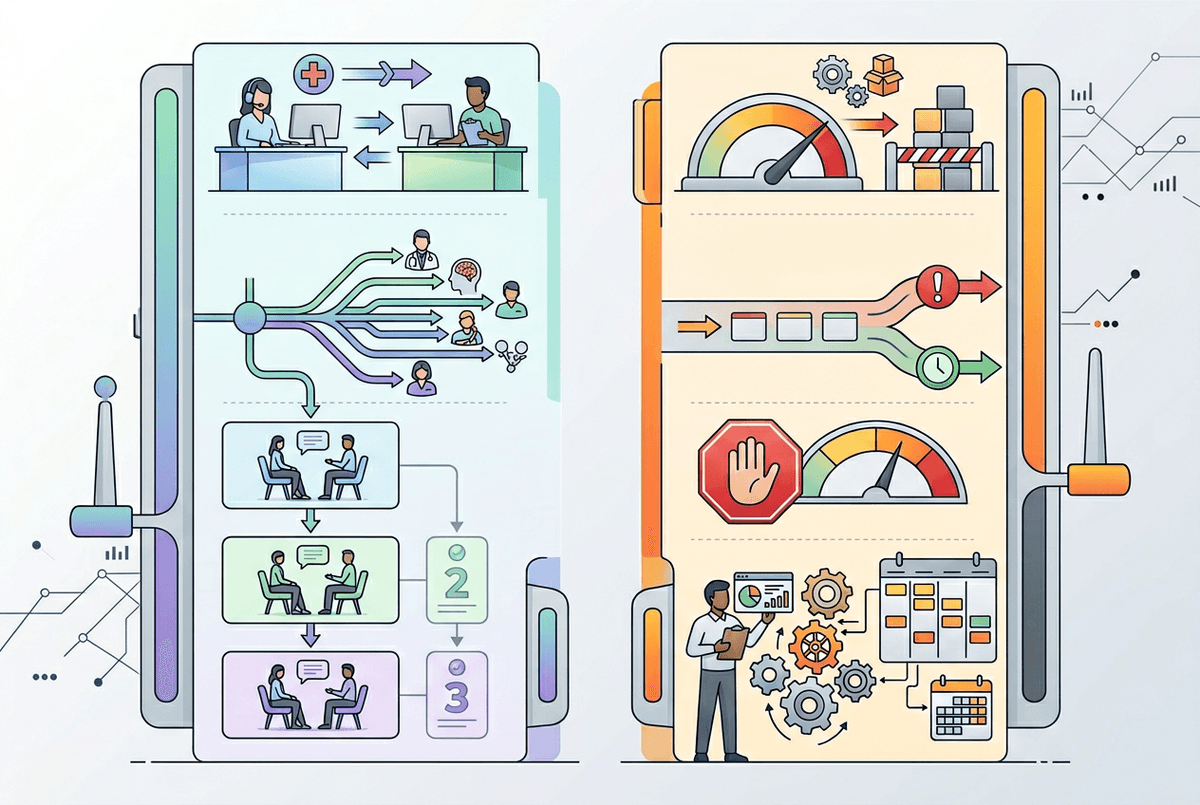
That “buy versus fix” decision usually shows up when a team asks for therapy coverage while the same roles keep running at 120% capacity. Benefits are the right lever when the problem is access: people can’t get timely care, don’t know where to start, or can’t afford sessions. That’s where better EAP intake, faster referrals, a small number of no-wait counseling visits, and manager-friendly guidance on “how to refer without diagnosing” can prevent a rough month from turning into a leave or resignation.
Work design is the right lever when the job keeps recreating the stressor. If overtime, late-night deadlines, or on-call intensity are predictable, no benefit can “treat” the calendar. The fixes look unglamorous: cap after-hours work, clarify what is truly urgent, set staffing thresholds that trigger a pause on new work, and hold managers to basic planning and coverage rules. If you don’t change those conditions, people may use the benefit and still burn out—just with more appointments on their schedule.
Political and operational: changing workload and manager behavior takes executive backing and time, and some teams will push back immediately. That’s why the practical move is a split plan—benefits to reduce friction to early care, and job changes targeted at the one or two pressure points you can actually enforce—before you decide how big to go on the “menu” of supports.
The mental health ‘menu’ is overwhelming: which supports are worth paying for?
That “menu” gets expensive fast when every vendor promises prevention but sells a different thing. In practice, the supports worth paying for are the ones that remove a specific bottleneck you can name: people can’t get in quickly, can’t figure out where to start, or won’t use care because it’s awkward to access through work. If your pressure pattern includes sudden leaves or crisis-level claims, prioritize faster entry points—strong EAP navigation, guaranteed short-term counseling slots, and clear pathways to higher-level care when needed.
If your pattern is churn and absenteeism after predictable peak periods, spend less on broad wellness content and more on manager-ready tools: micro-guides for having early conversations, referral scripts, and training tied to workload rules you can enforce. Add group options (skills-based classes, stress or sleep programs) only if you can drive attendance; otherwise you’ll pay for a library that nobody opens.
Who is this really for: the whole workforce, high-risk groups, or specific teams?

That “tight bundle” question gets sharper when someone asks who it’s actually for. A company-wide offer sounds fair, but it can waste money if your real costs come from a few roles or managers. Targeting sounds efficient, but it can feel like you’re labeling certain teams as “the problem,” and employees may avoid it if it looks like they’ve been singled out.
A practical split is: baseline access for everyone, plus targeted intensity where your data shows repeatable strain. Baseline means the simple entry points—clear navigation, quick counseling slots, and manager referral guidance—because anyone can hit a rough stretch, and you don’t want help to depend on who happens to be on a “high-risk” list. Then add focused supports for the places that drive leaves and exits: on-call teams, customer escalations, peak-season operations, or teams with high unscheduled absence.
Small teams can’t be reported safely, and managers will argue about “why us.” That’s why you’ll need a cost-savings story that’s credible without promising clean ROI.
Can you make a credible cost-savings case without promising ROI you can’t prove?
That “credible without clean ROI” tension shows up when leadership asks for a number and you can only show correlations. You can still make a solid cost-savings case if you anchor it to cost drivers you already pay for and treat the program like risk reduction, not a guaranteed return. Pick two or three metrics that leadership recognizes—regrettable turnover, unscheduled absence, and short-term disability leaves—and show the baseline trend, the teams where it concentrates, and what you’re doing that could realistically change the odds.
Build the math from real internal costs instead of vendor case studies. If replacing an employee costs you roughly 1–1.5x salary once you include recruiting fees, manager time, and ramp-up, then preventing even a small number of avoidable exits matters. Do the same for absence (overtime, missed service levels) and leaves (backfill and benefits premiums). Then present a range: “If we reduce X by 3–5% in these teams, here’s the savings band,” not a single point estimate.
Peak seasons, reorganizations, and one bad manager can swamp your signal. Your credibility goes up when you pair the spend with a 90-day measurement plan and state plainly what you will not be able to prove.
What success looks like after 90 days (and what it won’t fix)
That 90-day plan is where you prove you can run this like an operating change, not a feel-good launch. In three months, success looks like faster access and cleaner handoffs: shorter time-to-first appointment, higher EAP/navigation completion, and managers actually using the referral script instead of improvising. You should also see basic awareness move—fewer “I didn’t know we had this” questions—and enough usage to justify the bundle.
What you likely won’t see in 90 days is a clear drop in medical claims, disability leaves, or turnover. Those lag, and they get pulled around by hiring freezes, reorganizations, and peak workloads. You also won’t “program” your way out of chronic understaffing or a high-conflict leader; if those stay in place, your best outcome may be earlier help plus better documentation of where the job itself needs to change.
If you can show access improved, manager behavior shifted in a measurable way, and one or two pressure points got enforced, you’ve earned the right to expand—and to ask for the operational fixes that benefits can’t cover.