Why a wrist ganglion keeps refilling
It’s frustrating when the lump seems smaller in the morning, then noticeably fuller after a day of typing, lifting, or yoga—almost like it’s reacting to your schedule. That inconsistency can make it feel unpredictable, and it’s easy to assume “it must be growing,” when it may actually be cycling.
In many cases, what’s driving that refill pattern is a small connection between the cyst and the wrist joint (or a tendon sheath). Fluid can be pushed outward through a weak spot in the capsule and collect in the sac, especially when wrist motion and loading briefly raise pressure in the joint space. The tricky part is that this connection can behave a bit like a one-way valve: fluid moves into the sac more easily than it returns, so the cyst re-accumulates even after it partly deflates.
This is also why draining it doesn’t always “solve” it. Aspiration can remove what’s in the sac that day, but if the stalk-like connection remains, everyday wrist use may slowly refill it—sometimes within days, sometimes months—depending on how much the area is being stressed and how that valve-like pathway behaves.
Symptoms that matter more than cyst size
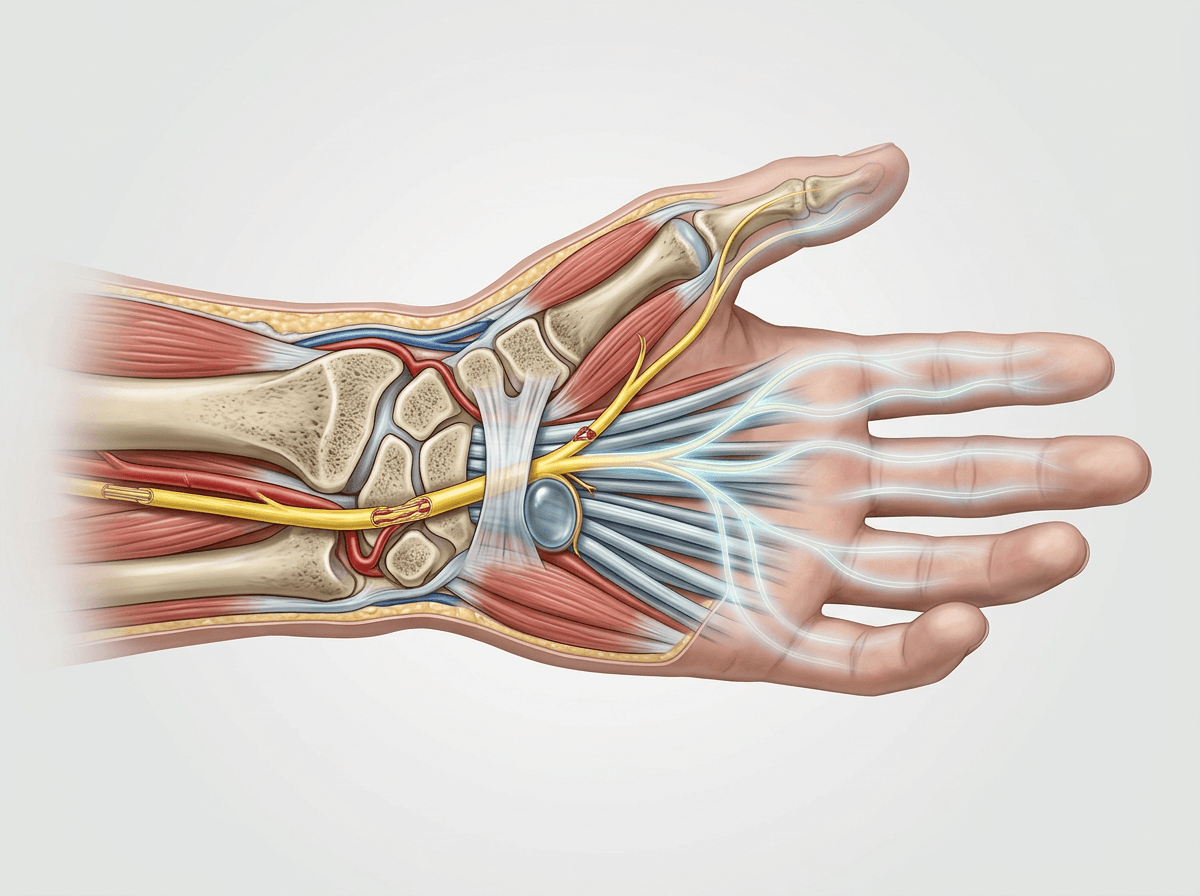
Sometimes the more telling moment isn’t when it looks bigger—it’s when a familiar task suddenly feels “off.” You might notice a sharp pinch in a push-up position, a dull ache that shows up only after gripping a dumbbell, or a strange weakness when opening a jar, even though the lump doesn’t seem that impressive.
That mismatch happens because symptoms often depend on what the cyst is pressing on, not its headline size. A smaller cyst in an awkward spot can irritate the joint capsule or rub a tendon as it glides, creating pain that flares with certain angles. If it sits closer to a nerve, it may trigger tingling, numbness, or a quick “electric” sensation into the hand—sometimes inconsistently—because the pressure changes with wrist position and swelling through the day.
In practice, function tends to matter more than the mirror test. Ongoing limits in typing, lifting, or weight-bearing on the wrist, night discomfort, or recurring tingling may carry more weight than whether the bump looks larger this week.
Watchful waiting versus active care: trade-offs
There’s a particular kind of doubt that shows up when the wrist feels fine at rest, then complains during one specific move—plank, kettlebell rack position, long typing stretches—and you’re left wondering whether doing “nothing” is actually a choice or just delay.
Watchful waiting often works when the main issue is appearance or mild, inconsistent aching, because some ganglions settle down as the joint irritation that feeds them fluctuates. The trade-off is uncertainty: as long as the stalk-like connection stays open, day-to-day loading can keep pushing fluid into the sac, so the lump may keep cycling and occasionally spike symptoms. That up-and-down pattern can also lead people to misread a good week as “it’s gone,” then get caught off guard when it refills.
Active care usually aims to change the mechanics rather than “deflate” the bump—reducing positions and forces that raise joint or tendon-sheath pressure and, in turn, how much fluid gets driven outward. The upside is more control over flares and function; the downside is effort and inconsistency, because the wrist still has to work for daily life, and improvement may not be linear.
Immobilization and ergonomic changes: why they help

You may notice it most when you first put on a brace: the wrist feels oddly stiff, and certain motions suddenly take more effort. That discomfort can be annoying, but it’s also a clue that you’ve changed the input that typically makes the cyst fluctuate—repeated bending, extension, and load through the joint during the day.
Immobilization helps mostly by lowering the pressure swings that drive fluid through that stalk-like connection. When the wrist isn’t moving as much, there may be fewer “pumps” pushing joint or tendon-sheath fluid outward into the sac, so the cyst can feel less tense and the aching may quiet down. It doesn’t necessarily close the connection, though, which is why symptoms can improve while the lump still lingers—or return quickly once full activity resumes.
Ergonomic changes work in a similar way, but more subtly and less consistently. A keyboard angle that keeps the wrist from sitting in extension, a different grip during lifting, or avoiding long weight-bearing positions may reduce repetitive capsule stress. The trade-off is that small changes are easy to underestimate, and it can be hard to tell whether a better week reflects the setup, the cyst’s natural cycling, or both.
Aspiration sounds simple, but surprises happen
It often starts with relief: the plan sounds straightforward—numb the area, draw out the fluid, and get your wrist back. Then the first surprise is that the cyst doesn’t always behave like a soft water balloon. Some contain thicker, jelly-like fluid that can be hard to pull through a needle, and the “successful” attempt may feel incomplete because the sac doesn’t fully collapse.
Even when a good amount comes out, the next days can feel oddly uncertain. The lump may look flatter but still feel tender, or it may refill sooner than you expected, which can make it seem like the procedure “didn’t work.” What’s usually behind that disappointment is the same valve-like setup: aspiration empties the reservoir, but it typically doesn’t eliminate the stalk where pressure changes from gripping, typing, or weight-bearing can keep driving fluid back into the sac.
There can also be small trade-offs that aren’t obvious upfront—temporary soreness, bruising, or a flare in aching if nearby tissues get irritated. If tingling, numbness, or weakness is part of the picture, that detail tends to matter more than how dramatic the bump looks afterward, since nerve irritation may not track neatly with size.
When removal becomes the clearer next step
After a few cycles of “better for a while, then suddenly back,” the frustrating part is how hard it is to plan around it. You might baby the wrist for weeks, feel almost normal, and then one heavier week of typing, lifting, or weight-bearing makes the lump tense again—and the symptoms start to feel less optional.
Removal often becomes the clearer next step when function keeps losing the argument: repeated recurrences after aspiration, persistent pain with everyday angles, or symptoms that suggest a nearby nerve is getting crowded (tingling, numbness, a zinging sensation, or grip that feels unreliable). The reason is mechanical. As long as the cyst’s stalk-like connection can open under pressure, the joint or tendon sheath can keep feeding the sac, even if the surface bump looks “not that big” on a given day.
There’s still a trade-off, because “doing something definitive” introduces its own recovery timeline and uncertainty. But if symptoms are trending toward limitation rather than annoyance, it’s usually worth getting a focused exam sooner rather than later.
Surgical options and what recovery really entails
The first days after removal can feel deceptively quiet—until you try to twist a doorknob or put weight through the palm and realize how much the wrist was being protected by habit. That mismatch is common, because surgery may remove the visible sac, but the area still has to calm down after the capsule and surrounding tissues have been handled.
In general, the goal is to take out the cyst and address the stalk-like connection so it’s less able to refill. That can be done through a more traditional open approach or an arthroscopic (scope-assisted) approach; the differences tend to show up in incision size, what the surgeon can directly see and remove, and the pattern of soreness afterward. Neither route guarantees zero recurrence, which can feel frustrating when you expected “fixed” to mean permanent.
Recovery is usually less about pain and more about stiffness and trust: swelling and scar sensitivity can make gripping feel inconsistent, and it may take time for motion and strength to feel predictable again. If numbness or tingling shows up or worsens instead of steadily settling, that’s a reason to check back in rather than trying to push through it.