The budget you expect fails by week two
It usually breaks around the second Friday. The first week looks clean because the big, predictable charges haven’t hit yet, and motivation is still doing part of the work. Then the month shows up: a renewal you forgot was annual, a school fee, a higher utility bill, a dinner that turns into two, and suddenly the “leftover” category is doing all the damage control.
What makes this feel like failure isn’t overspending on one thing; it’s the timing mismatch. Bills cluster early, paychecks land on fixed days, and the flexible stuff leaks out in small decisions that don’t feel like decisions. A budget that assumes evenly spaced expenses forces constant mid-month rewrites, which is friction most households won’t sustain.
A more useful test is simple: by day 14, can the plan survive one surprise charge without tapping credit? If not, it’s not discipline that’s missing—it’s slack.
Pay yourself first, before bills feel urgent
Slack usually appears only if it’s claimed before the month starts making demands. Waiting to “see what’s left” after bills is how saving becomes the category that absorbs every timing surprise. The practical shift is treating savings like a bill that happens right after payday, while the money still feels available.
The cleanest version is an automatic transfer on the same day your paycheck hits: a set amount to a high-yield savings account or brokerage cash, not whatever you hope will be left. Start smaller than your ambition—$50–$200 per paycheck is enough to change behavior without causing late fees—and adjust after two pay cycles. If the transfer triggers overdrafts, that’s useful data: the amount was too high, or the bills are landing earlier than you thought.
Once it’s automated, the urgency flips. Bills still get paid, but the “urgent” feeling doesn’t get first claim on every dollar.
Use one checking account to stop surprise overdrafts
The next leak is operational: too many places for money to sit while autopayments pull from only one of them. Households split funds into “bills checking” and “spending checking,” then a card payment posts a day early or a utility drafts higher than usual. The penalty isn’t the $8 surprise; it’s the $35 overdraft and the cascade of returned payments.
One checking account simplifies the math. Route paychecks there, run every bill and card autopay from there, and keep one buffer target (even $300–$800) that never gets treated as spendable. It’s not elegant, but it’s hard to misread.
If you like bucketed money, do it outside checking: separate savings accounts with names. Checking is for flow. The trade-off is losing the “mental separation,” but the gain is fewer timing failures—and fewer fees that erase a week of progress.
Kill high-interest debt without heroic discipline
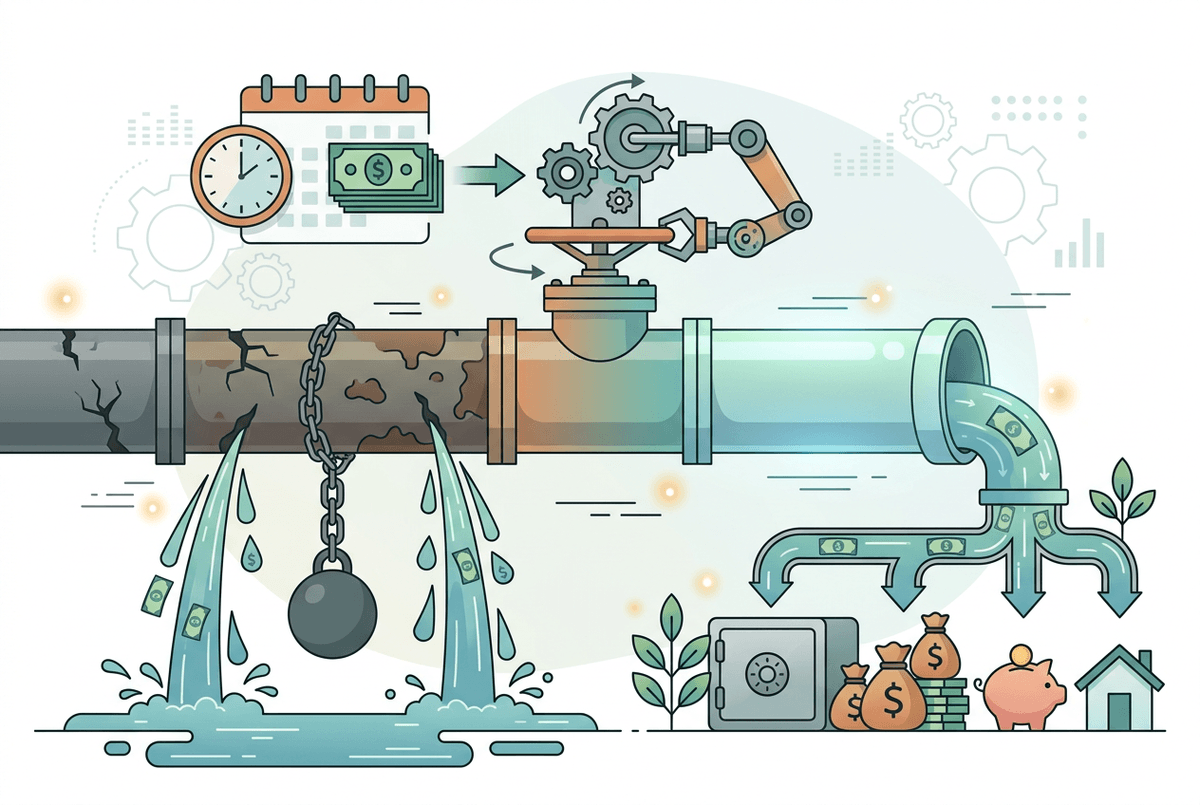
Once cash flow is less chaotic, high-interest debt stops being a moral project and becomes a math leak you can cap. Credit cards at 18%–30% APR compound quietly, and the real obstacle is usually timing: the “extra” payment only exists on paper, then gets consumed by a birthday weekend or a higher-than-normal draft.
The low-friction approach is to lock in a fixed overpayment on payday, not month-end. Keep minimum payments on everything, then set one automatic transfer that hits the highest APR balance 24–48 hours after your paycheck lands. The amount should be boringly survivable—$75, $150, $250—because missed payments and late fees erase the benefit fast.
If the balance is large and your credit allows it, a 0% balance transfer can buy time, but only if the transfer fee and the payoff window fit your actual monthly surplus. Otherwise it becomes a new deadline with the same old spending patterns attached.
Negotiate recurring bills like a yearly ritual
After the big leaks are contained, the next wins usually come from the bills that never feel optional: internet, cell plans, car and home insurance, streaming bundles, even trash service in some areas. They drift upward quietly, and because they’re “only” $10–$40 at a time, they rarely get the same attention as debt. The constraint is time—you won’t comparison-shop monthly—so treat it like an annual appointment.
Pick one weekend each year (or two 30-minute blocks) and rotate categories: this month insurance, next month internet and phone. Pull up the last 12 months of charges, then ask for a lower rate or a current promo. If they won’t move, request a cancellation date; retention often finds options that frontline support won’t.
Expect some friction: new customer promos expire, autopay discounts can break, and switching can trigger setup fees. The goal isn’t perfection—it’s shaving $30–$120 a month without creating a new recurring headache.
Raise your savings rate using paycheck upgrades
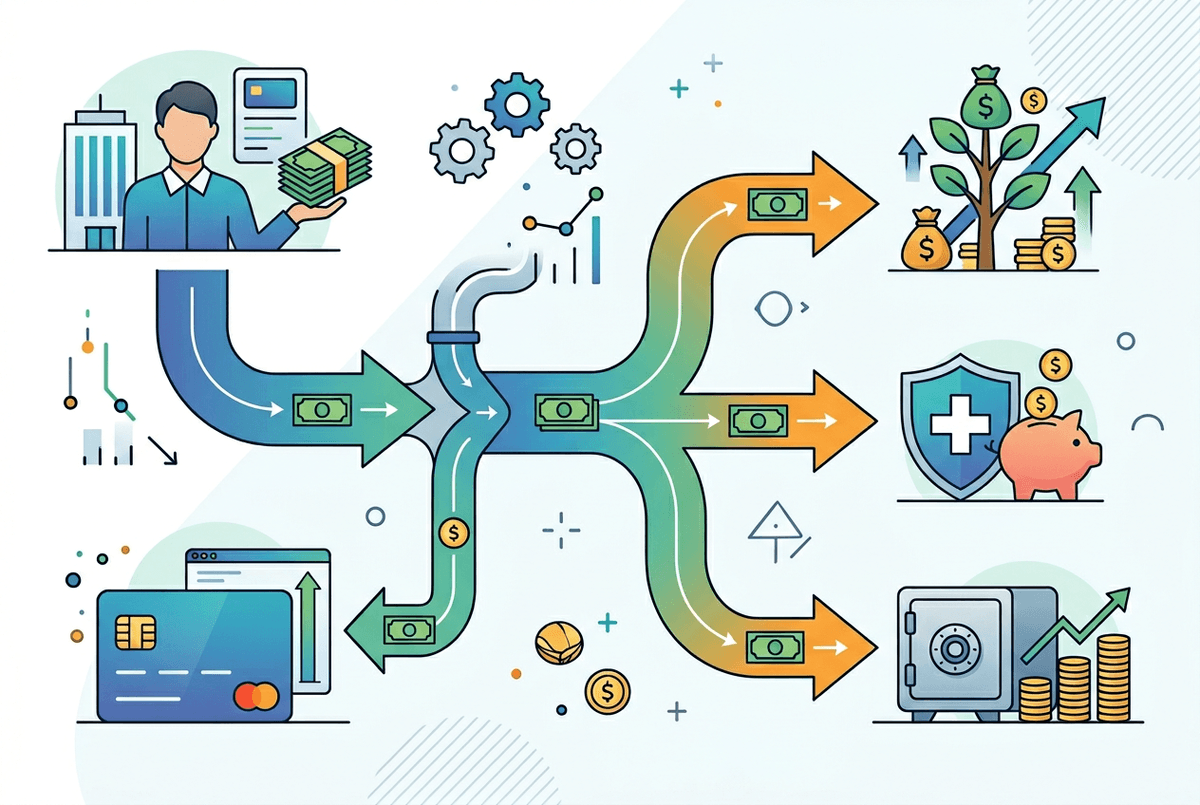
At this point, the highest-leverage change usually isn’t another cut; it’s capturing money before it ever becomes “available.” Raises, annual bonuses, and even a lower insurance premium are the clean moments to upgrade savings, because the household hasn’t built new spending around the new take-home yet. The constraint is payroll timing: most employers take one to two pay cycles to apply changes, so waiting for the “next check” can quietly turn into a month.
The practical move is a pre-commit rule: for any increase in gross pay, route 30%–70% of the difference into something automatic—401(k) contribution increase, HSA payroll deduction, or a second direct deposit to savings. It’s less about the exact percent and more about doing it before the calendar fills the gap. If cash gets tight, back it down after two pay cycles, not in the moment.
Prioritize the employer match first, then any payroll-linked accounts (401(k)/HSA) that reduce taxable income. After that, treat the rest like a transfer you can reverse. The downside risk is overcorrecting and creating overdrafts or new card balances, which wipes out the upgrade fast.
Create a small buffer that prevents backsliding
Even with the transfers and the cleaner checking setup, the month still has sharp edges: a prescription, a tire, a kid’s field trip that shows up three days before payday. Without a dedicated buffer, those hits land on a card, and then the next pay cycle goes to “catching up” instead of moving forward. That’s how a good system quietly turns into a loop.
The buffer doesn’t need to be a full emergency fund. Start with a specific number that matches your real friction—often $500–$1,500—kept in the same high-yield savings where you’re already sending money. Build it with a fixed, small auto-transfer until it’s done, then stop that transfer so it doesn’t compete with debt payoff or retirement.
Make the rule boring: the buffer is for timing problems, not lifestyle. If you use it, the next two paychecks refill it before anything else gets “extra.” The constraint is patience: it can take 6–10 pay cycles, but it prevents the one slip that unravels the month.