When work stress starts feeling personal
You open your laptop and your stomach drops, even though nothing “bad” has happened yet. A Slack ping feels like a verdict. You start rereading emails for tone, rewriting a simple update three times, or scanning your calendar like it’s a threat report.
When stress turns personal, it usually means your brain has started treating everyday work signals—silence from a manager, a vague request, a full inbox—as risk. That can push you into overworking, avoiding visibility, or staying “on” after hours just to feel caught up.
Is this normal pressure—or a signal something’s off?
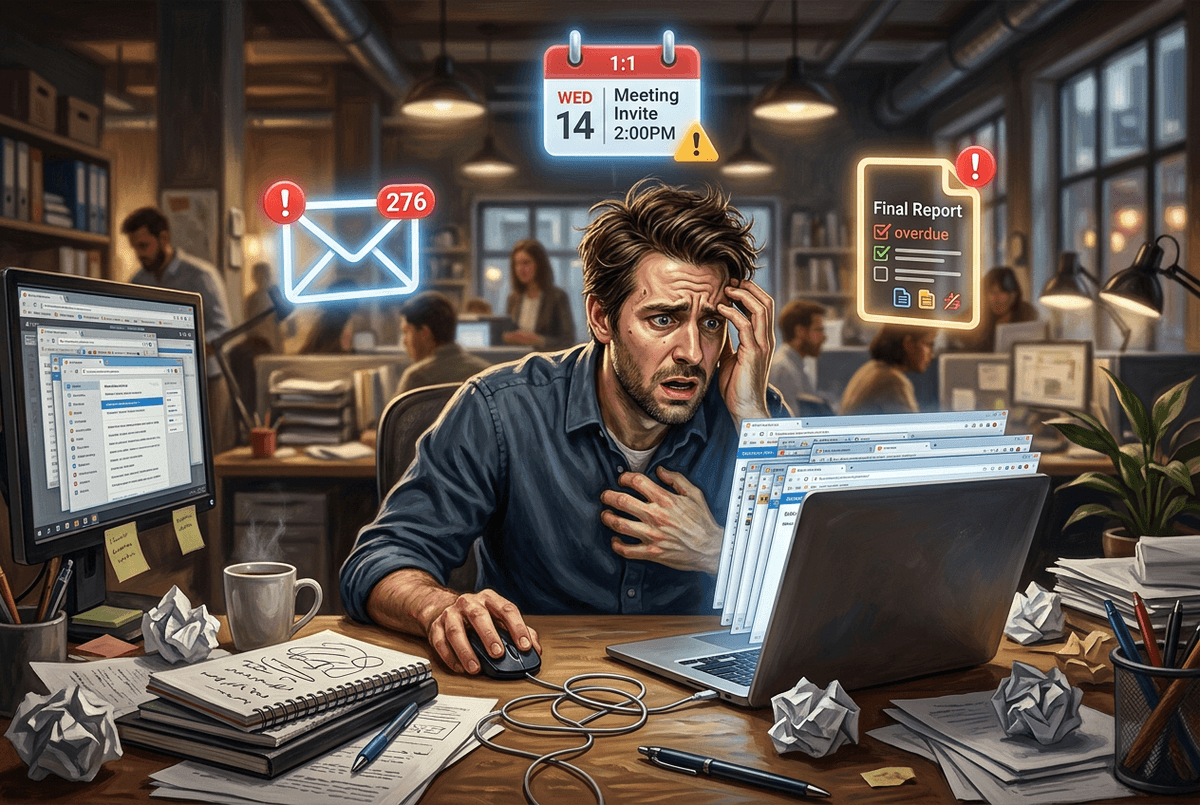
Most jobs come with short bursts where you feel keyed up: a deadline week, a big presentation, a tense client call. You work harder, sleep a little worse, then your body settles when the moment passes. Normal pressure tends to track the calendar. When the deadline moves, the alarm quiets.
A signal something’s off looks different. The stress stays high even on “easy” days, or it spikes around specific cues—an unread message, a 1:1 invite, a task that isn’t hard but is exposed. Your behavior narrows: you procrastinate, overcheck, overexplain, or avoid asking questions because it might make you look unprepared. If the only way you can get relief is by working later, checking constantly, or numbing out, that’s not just pressure—it’s a pattern with a cost.
To sort it out without guessing, you need to see what in your week reliably sets it off.
What’s actually setting it off in your week?
Most weeks have a few repeat moments that flip the switch: the Monday triage meeting, the 3 p.m. status ask, the “quick call?” from a senior person. If you can name those moments, you stop treating the anxiety as random and start treating it as a response to a predictable setup.
For five workdays, track three things in a note (60 seconds each time): the cue (what happened), the story (what you told yourself it means), and the move (what you did next). Example: cue—manager reacts with “OK” only; story—I’m about to get criticized; move—rewrite the doc for two hours. Patterns show up fast: ambiguity, visibility, and waiting tend to hit harder than “hard work.”
This is harder in real life than it sounds because you’ll miss entries when you’re busiest, and some cues happen too fast to notice. That’s fine. You’re looking for the top two triggers that repeat, not a perfect log—and those will shape what to do first.
How anxiety shows up at work (and how it can hide)
Those top two triggers usually don’t show up as “I’m anxious.” They show up as work moves that look responsible: polishing, checking, staying available, fixing things before anyone asks. If the cue is visibility, you may start overpreparing for meetings, adding extra context to cover every angle, or volunteering for “one more revision” so nothing can be pinned on you.
Anxiety also runs through your body and attention. You might feel a tight chest, jaw clenching, shaky focus, or a constant urge to switch tabs. You reread the same paragraph, forget what you just read, or can’t start until you’ve cleaned up your inbox. These aren’t character flaws; they’re signs your threat system is running during tasks that need calm, steady thinking.
Overfunctioning can win praise while you burn time, skip breaks, and train others to expect instant replies. If the pattern persists for weeks, spreads beyond one project, or pushes you toward avoidance and sleep loss, that’s a signal to pick your first moves on purpose.
Choose your first moves: fast relief vs lasting change
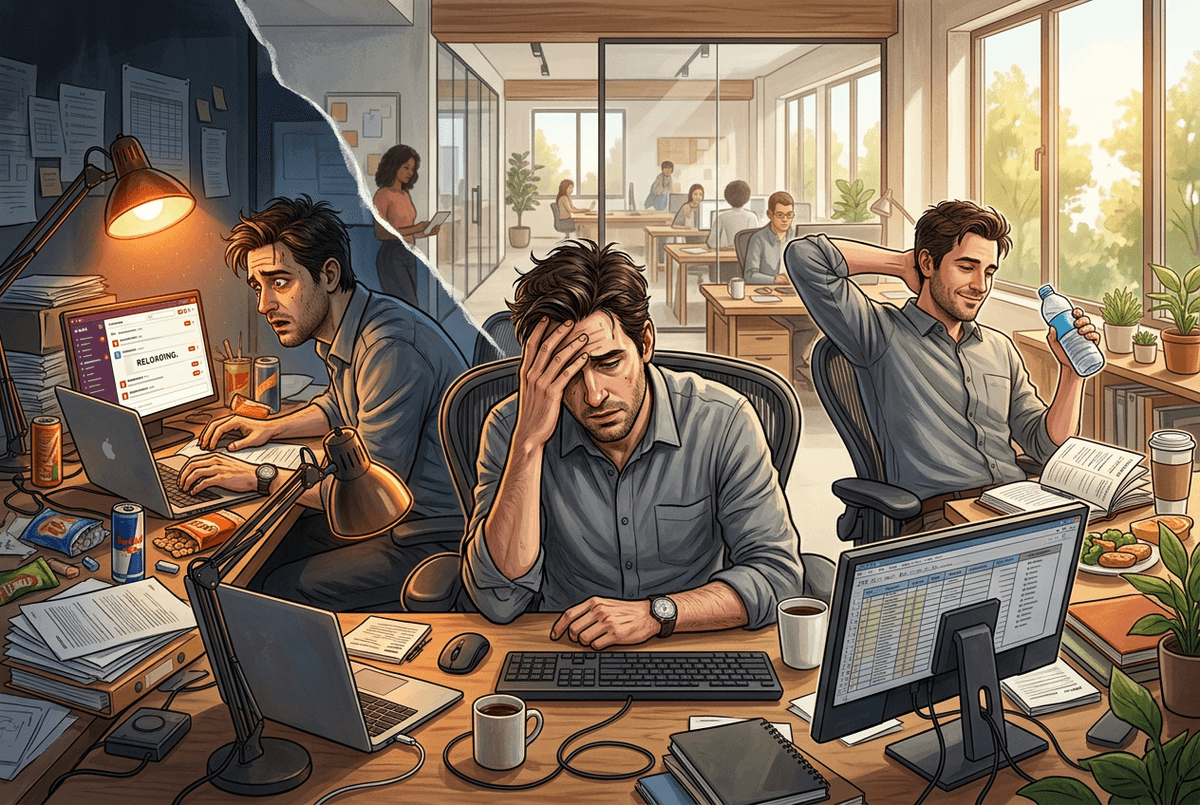
Picking your first moves on purpose usually means you’re deciding what you need in the next 20 minutes versus the next 20 workdays. In a familiar week, the trigger hits, your body ramps up, and you reach for the quickest fix: rewrite, recheck, refresh Slack, stay late. Some “fast relief” is useful, but only if it lowers the physical alarm enough for you to think and choose.
For fast relief, use a short, repeatable reset that doesn’t require privacy: two minutes of slower breathing, a brief walk to get water, or a timed “good-enough” draft sprint (10 minutes, no edits). Then add one boundary that reduces fuel: turn off banners, check messages at set times, or write the next step in one sentence before you switch tasks. The limitation: these moves won’t help if the trigger is a real work risk, like unclear ownership or shifting deadlines.
If ambiguity sets you off, ask one clarifying question early (“What does ‘done’ look like?”). If visibility sets you off, agree on a preview point (“I’ll send a rough version by Thursday”). If your anxiety drops only when you overwork, the next section is about what you can change without backlash.
If work design is the fuel, what can you change without backlash?
Changing it without backlash usually means adjusting the “interface” between you and other people: what gets asked, when, and in what format. In practice, that looks like swapping vague requests for a one-line spec (“Can you confirm the goal, audience, and due time?”), adding a checkpoint before you disappear into polishing (“I’ll share a rough outline at 2 p.m.”), or reducing surprise work by keeping a simple visible queue (“I can take this after X, unless Y is higher priority”).
If your trigger is constant reachability, propose a predictable rhythm instead of a hard no: two message windows, a daily status note, or office-hour blocks for quick questions. If meetings spike your anxiety, ask for an agenda question in advance, or send your update in writing and use the meeting for decisions only.
These moves can expose capacity and force choices, which some teams avoid. If you try two tweaks and the anxiety still rides on real risk—unstable deadlines, unclear ownership, retaliation for boundaries—it’s time to pull in support and use clearer escalation paths.
When to loop in support—and what “escalate” really means
When two reasonable work-design tweaks don’t change the feeling, it usually means the risk isn’t in your head—it’s in the setup. Loop in support when the pattern lasts for weeks, starts hurting sleep, or you’re doing “safety work” (checking, rewriting, staying online) just to feel okay. Start small: ask a trusted peer to sanity-check expectations, then use your manager’s 1:1 to align on priorities, “done,” and response-time norms in writing.
“Escalate” means matching the channel to the problem. If deadlines or scope are unstable, escalate with a concrete log: what changed, what it cost, what you need decided. If it’s retaliation, harassment, or threats to your job, skip subtlety and use HR, an ombuds office, or employee relations. Formal paths create records and can change dynamics, so keep notes and be specific.